




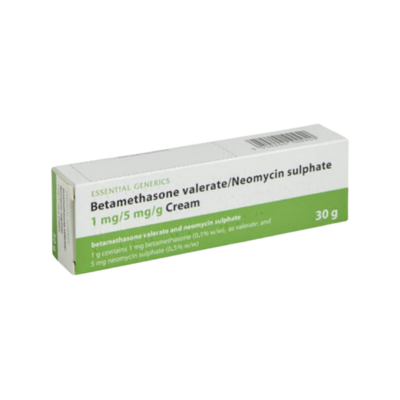
Betamethasone with Neomycin Cream

- Reduces redness, swelling, and itching fast
- Protects against bacterial skin infections
- Dual-action formula for inflammation + infection risk

Betamethasone with Neomycin Cream
Category:Skin InfectionBetamethasone with Neomycin Cream is a prescription treatment that combines a potent corticosteroid and antibiotic to relieve inflammation, itching, and irritation in skin that is already infected with susceptible bacteria. It is not intended for use on uninfected skin or as a preventative measure.
Fetching Data...



Frequently Asked Questions for Betamethasone with Neomycin Cream
Further Information
What it is
A topical cream containing betamethasone valerate (a corticosteroid) and neomycin sulphate (an antibiotic). It is the unbranded equivalent of the discontinued Betnovate N cream, used for eczema, dermatitis, psoriasis, and other inflamed skin conditions at risk of infection.
How it works
-
Betamethasone valerate: Reduces swelling, redness, and itching by blocking the release of inflammatory chemicals in the skin.
-
Neomycin sulphate: Stops bacteria from making proteins they need to survive, helping kill infections and prevent further bacterial growth.
How to administer
-
For adults aged 18+ only.
-
Wash hands before and after application (unless treating hands).
-
Apply a thin layer to the affected area 1–2 times daily for up to 7 days.
-
Avoid using for more than 5 days on facial skin.
-
If using airtight dressings, clean the area before applying and replace with a fresh dressing.
-
Leave 30 minutes between this cream and any other topical medicines.
Side effects
Possible side effects include:
-
Allergic reactions
-
Itching or burning sensations
-
Small bumps under skin (particularly in psoriasis)
Warnings & Precautions
-
Not suitable if allergic to any ingredient.
-
Avoid use on inflamed skin around genitals/anus unless directed by a doctor.
-
Can worsen acne, rosacea, perioral dermatitis, and viral/fungal/bacterial infections.
-
Use with caution if you have kidney problems or are treating psoriasis (requires monitoring).
-
Consult a GP if symptoms do not improve in a few days.