





Emgality

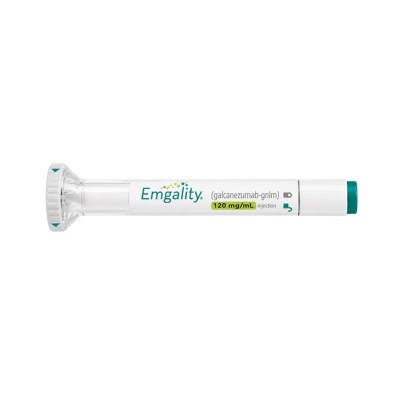
- Migraine prevention treatment for eligible adults
- Designed for people with 4 or more migraine days per month
- Focused on reducing migraine frequency over time
- Continuation treatment only

Emgality
Category:Migraine PreventionEmgality contains galcanezumab and is used for the prophylaxis of migraine in adults who have at least 4 migraine days per month. It is a once-monthly self-injectable treatment supplied in a pre-filled pen.
Fetching Data...




Frequently Asked Questions for Emgality
Further Information
- What is Emgality?
- How does Emgality work?
- How is Emgality taken?
- How effective is Emgality? (Clinical trial data)
- Who is Emgality suitable for?
- When should Emgality be avoided or used with caution?
- When should Emgality be avoided or used with caution?
- What if Emgality is not suitable?
- Important safety information
What is Emgality?
Emgality is a preventive treatment used in adults for migraine prevention. It is suitable for patients who experience at least 4 migraine days per month. It is not used to treat an active migraine attack.
How does Emgality work?
Emgality is a CGRP monoclonal antibody. It works by blocking calcitonin gene-related peptide (CGRP), a molecule involved in migraine pain pathways. By reducing CGRP activity, it helps reduce the frequency of migraine attacks over time.
How is Emgality taken?
- Given as a self-injection once monthly
- Administered using a pre-filled pen or syringe
- It is a preventive treatment, not a pain relief medication
How effective is Emgality? (Clinical trial data)
Episodic migraine (EVOLVE-1 & EVOLVE-2 trials)
Patients had fewer monthly migraine headache days compared with placebo:
- EVOLVE-1: 4.7 vs 2.8 fewer migraine days/month
- EVOLVE-2: 4.3 vs 2.3 fewer migraine days/month
- Results measured over 6 months
Chronic migraine (REGAIN trial)
- 4.8 vs 2.7 fewer migraine days/month (Emgality vs placebo)
- Measured over 3 months
Responder rates (≥50% reduction in migraine days)
- Up to ~73–80% of patients achieved ≥50% reduction in migraine-related disability in clinical trials
- Compared with ~55% on placebo
Key clinical trial summary (safety & tolerability)
Across clinical studies:
- Most common adverse effect: injection site reactions (≥2%)
- Discontinuation due to side effects: low
- Overall tolerability: generally favourable compared with placebo
Who is Emgality suitable for?
Emgality may be considered for adults with:
- 4 or more migraine days per month
- Inadequate response, intolerance, or contraindication to other preventive treatments
- Chronic or episodic migraine requiring preventive therapy
Common side effects
The most common side effects are:
- Injection site reactions (pain, redness, swelling)
When should Emgality be avoided or used with caution?
Emgality may not be suitable if you have:
- Severe allergy to galcanezumab or ingredients in the injection
- Significant uncontrolled cardiovascular or vascular disease (requires clinical review)
- History of significant hypersensitivity reactions to monoclonal antibody therapies
Special precautions
Patients should inform their clinician if they have:
- High blood pressure
- Circulation disorders (e.g. Raynaud’s)
- Pregnancy or breastfeeding
- Other ongoing medical conditions or medications
How quickly does it work?
- Some patients notice improvement within 1–4 weeks
- Full response is usually assessed after 2–3 months
Do I need to try other treatments first?
In most pathways:
- At least 2–3 preventive treatments are usually tried first
- Exceptions apply if treatments are not suitable or not tolerated due to medical reasons
What if Emgality is not suitable?
Other migraine preventive options may still be available, including:
- Alternative CGRP inhibitors
- Oral preventive medications
- Specialist headache clinic pathways
Important safety information
High blood pressure
- New or worsening high blood pressure has been reported
- Blood pressure should be monitored during treatment
- Seek medical advice if BP increases
Raynaud’s phenomenon
May develop or worsen during treatment
Symptoms include:
- Cold, numb, or painful fingers/toes
- Colour changes (white/blue/red)
Treatment should be reviewed if symptoms occur
Allergic (hypersensitivity) reactions
- Rash, swelling (angioedema), urticaria, or breathing difficulty may occur
- Rare cases of anaphylaxis reported
- Reactions may occur days after injection
- Stop treatment and seek urgent medical care if severe reaction occurs
Other reported risks
- Fatigue
- Mild systemic symptoms are uncommon