





Melatonin 3mg Tablets

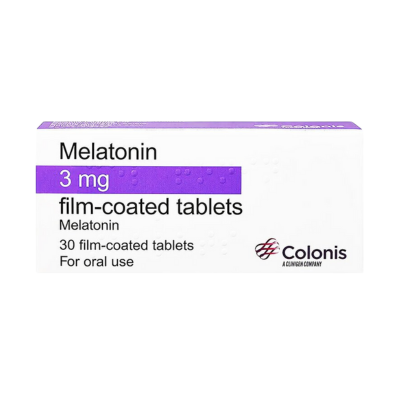
- Assists in Overcoming Jet Lag
- Promotes Better Sleep
- Fast-Acting
- UK Regulated Pharmacy

Melatonin 3mg Tablets
Category:Jet LagMelatonin 3mg tablets are a prescription treatment for jet lag in adults crossing five or more time zones. Melatonin is a hormone naturally produced by the body to regulate your sleep-wake cycle. When you travel rapidly across time zones, this cycle falls out of sync with your destination, causing the fatigue, disrupted sleep, and poor concentration associated with jet lag. Taking melatonin at the correct time in the destination time zone helps reset your body clock and speeds up recovery.
Fetching Data...




Frequently Asked Questions for Melatonin 3mg Tablets
Key Benefits
- Prescribed specifically for jet lag in adults
- Helps reset the body clock after crossing five or more time zones
- Fast-acting, taken at bedtime on arrival at your destination
- Maximum five-day course per travel occasion
- Suitable for up to 16 travel occasions per year
What is Melatonin and How Does it Work for Jet Lag?
Melatonin is a hormone produced by the pineal gland in response to darkness. Each evening as light fades, melatonin levels rise and signal to the body that it is time to prepare for sleep. As light returns in the morning, melatonin falls and wakefulness is restored. This daily cycle, known as the circadian rhythm, governs sleep, body temperature, digestion, and hormone release.
When you travel rapidly across multiple time zones, your circadian rhythm stays aligned with your origin time zone while your destination operates on a completely different schedule. The result is jet lag. Taking melatonin at the right time in the new time zone sends a signal directly to the brain's circadian clock, helping to shift it towards the destination schedule and accelerating recovery from symptoms.
Melatonin is not a sedative or sleeping tablet. Its action is chronobiotic, meaning it adjusts the timing of the internal body clock rather than inducing sleep directly. This is why it is effective for jet lag, where the core problem is one of circadian misalignment rather than an inability to sleep.
Jet lag is generally more severe when travelling eastward because the body must advance its clock, which is a harder adjustment than the delay required when travelling west. Melatonin is particularly effective for eastward travel for this reason.
How to Use Melatonin 3mg Tablets
Dose: Take one 3mg tablet once daily at bedtime upon arrival at your destination. If one tablet does not adequately manage your symptoms, the dose may be increased to two tablets (6mg) taken together, as directed by your prescribing pharmacist.
Timing: The tablet must be taken between 20:00 and 04:00 local destination time. Taking it outside this window reduces effectiveness and may worsen circadian misalignment rather than improve it.
Duration: Use for a maximum of five consecutive days per travel occasion. Take the lowest dose that works for the shortest time necessary.
Food: Avoid eating for at least two hours before and two hours after taking the tablet. Carbohydrate-rich meals taken close to the dose can reduce melatonin's effectiveness and may affect blood glucose regulation.
Alcohol: Do not drink alcohol while taking melatonin. Alcohol impairs sleep quality and worsens the fatigue and concentration difficulties associated with jet lag.
Annual use: Melatonin 3mg tablets can be used for up to 16 separate travel occasions per year. They are not for continuous daily use and are not indicated for any sleep condition unrelated to transmeridian travel.
Side Effects
Side effects are generally mild and uncommon given the short five-day course and the fact that melatonin is a naturally occurring hormone.
Common side effects include drowsiness, headache, dizziness, and abdominal discomfort. Exercise caution when driving or operating machinery until you know how the medication affects you at your destination.
Less common side effects include skin irritation and chest discomfort. Rare but serious reactions include persistent severe headache, visual changes, and confusion. If any of these occur, stop taking the medication and seek medical attention promptly.
Warnings and Precautions
- Driving and machinery: Melatonin may cause drowsiness. Do not drive or operate heavy machinery if you feel sleepy after taking your dose.
- Seizures: Melatonin may increase seizure frequency in people with a history of epilepsy or seizure disorders. Discuss suitability with your prescribing pharmacist before use.
- Diabetes: Melatonin may affect blood glucose in some individuals, particularly when taken close to meals. Follow the food timing guidance carefully and monitor your blood glucose as normal when travelling.
- Renal and hepatic impairment: Not recommended for patients with severe kidney impairment or moderate to severe liver impairment.
- Pregnancy and breastfeeding: Consult your prescribing pharmacist or GP before use if you are pregnant, planning pregnancy, or breastfeeding.
- Children and adolescents: Not recommended for anyone under 18 years of age.
- Hypersensitivity: Do not take if you have a known allergy to melatonin or any of the tablet ingredients.
- Not for insomnia: Melatonin 3mg tablets are prescribed here exclusively for jet lag caused by transmeridian travel. They are not indicated for insomnia or any sleep condition unrelated to crossing time zones. If you are experiencing ongoing sleep difficulties not related to travel, speak with your GP.
More FAQs
- What is melatonin used for at My London Pharmacy? Melatonin 3mg tablets are prescribed here exclusively for the treatment of jet lag in adults travelling across five or more time zones. They are not prescribed for insomnia or general sleep problems unrelated to travel.
- How is jet lag different from insomnia? Jet lag is a temporary disruption to the circadian rhythm caused by rapidly crossing multiple time zones. It resolves naturally as the body clock adjusts and is directly addressed by melatonin's chronobiotic action. Insomnia is a persistent difficulty sleeping that exists independently of travel and requires a different clinical approach. Melatonin 3mg is not an appropriate treatment for insomnia.
- When should I take melatonin for jet lag? Take one 3mg tablet at bedtime on the night of arrival at your destination, between 20:00 and 04:00 local destination time. Continue for up to five consecutive nights. Do not take outside this time window.
- How many days should I take melatonin? Each treatment course lasts a maximum of five days. Use the lowest dose that manages your symptoms and stop once your body clock has adjusted. Up to 16 separate travel occasions per year are considered appropriate.
- Is melatonin a sleeping tablet? No. Melatonin is not a hypnotic or sedative. It works by adjusting the timing of your internal body clock, which is why it is specifically effective for jet lag rather than general sleeplessness.
- Can I buy melatonin for jet lag online in the UK? Yes. Melatonin 3mg tablets are available from My London Pharmacy following a short online consultation reviewed by our UK-registered independent prescribing pharmacist. No GP appointment is required.
- What are the side effects of melatonin? Common side effects include drowsiness, headache, dizziness, and abdominal discomfort. Serious reactions are rare but include persistent severe headache, visual changes, or confusion. Stop taking the medication and seek medical attention if these occur.
- Can I drink alcohol while taking melatonin? No. Alcohol should be avoided throughout the course as it impairs sleep quality and worsens jet lag symptoms.