





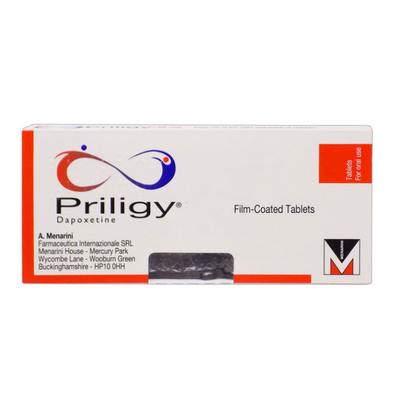
Priligy (Dapoxetine)

- Effective for Premature Ejaculation
- Works within 1-3 Hours of Intake
- Flexible Dosage
- Clinically Proven

Priligy (Dapoxetine)
Category:Premature EjaculationPriligy (dapoxetine) is a medication used for the treatment of premature ejaculation in adult men.
Fetching Data...



Frequently Asked Questions for Priligy (Dapoxetine)
What is Priligy?
Priligy is a prescription tablet containing dapoxetine, a short-acting selective serotonin reuptake inhibitor (SSRI) specifically developed and licensed for the treatment of premature ejaculation in adult men aged 18 to 64. Unlike daily SSRI antidepressants, Priligy is taken on demand, one to three hours before sexual activity, and is cleared from the body quickly. It is the first and only oral medication specifically approved for on-demand use in premature ejaculation.
Available in two strengths: 30mg as the recommended starting dose, and 60mg for those who have tolerated the lower dose without severe side effects but require a stronger response. Treatment should be reviewed every four weeks initially and every six months thereafter.
How Does Priligy Work?
Priligy contains dapoxetine, a fast-acting selective serotonin reuptake inhibitor (SSRI). Unlike conventional SSRIs prescribed as daily antidepressants, dapoxetine has a very short half-life, which means it is absorbed and cleared from the body rapidly, making it suitable for on-demand use rather than daily dosing.
Dapoxetine works by inhibiting the reuptake of serotonin at neuronal synapses, increasing serotonin activity in the central nervous system. Serotonin plays a significant role in regulating the ejaculatory reflex, and increased serotonergic activity is associated with a delay in ejaculation and improved voluntary control. Clinical studies have shown that Priligy significantly increases intravaginal ejaculatory latency time (IELT) and improves patient-reported measures of ejaculatory control and sexual satisfaction.
The medication reaches peak plasma concentration approximately one to two hours after oral administration, which is why it is recommended to take it one to three hours before sexual activity.
How to Use Priligy
Starting dose: Take one 30mg tablet with a full glass of water, one to three hours before anticipated sexual activity.
Dose increase: If the 30mg dose provides insufficient benefit and has been well tolerated with no severe side effects, the dose may be increased to 60mg. This decision should be made in consultation with your prescribing pharmacist after an initial review.
Frequency: Priligy should not be taken more than once in any 24-hour period and should not be used more than three times in a single month.
Food: Priligy can be taken with or without food. However, avoid grapefruit juice for at least 24 hours before taking the tablet as it can affect how the medication is metabolised.
Alcohol: Avoid alcohol while taking Priligy. Alcohol significantly increases the risk of dizziness, fainting, and other adverse effects.
Sitting and standing: Because dapoxetine can cause a drop in blood pressure when standing up quickly (orthostatic hypotension), rise slowly from sitting or lying positions for several hours after taking the tablet. Avoid activities that require rapid positional changes.
Treatment review: Your treatment should be reviewed after four weeks or six doses to assess effectiveness and tolerability. Your prescribing pharmacist will reassess your suitability for ongoing treatment every six months.
Who Is Priligy Suitable For?
Priligy is indicated for adult men aged 18 to 64 who meet the following clinical criteria: intravaginal ejaculatory latency time (IELT) of less than two minutes, persistent ejaculation occurring with minimal sexual stimulation, significant personal distress or interpersonal difficulty as a result of premature ejaculation, poor subjective control over ejaculation, and a history of premature ejaculation occurring in the majority of sexual encounters over the past six months.
Priligy is not suitable for men under 18 or over 64, or for men whose premature ejaculation is situational rather than persistent. It is not a treatment for erectile dysfunction and should not be taken alongside PDE-5 inhibitors such as sildenafil or tadalafil due to the increased risk of adverse cardiovascular effects.
Side Effects
Common side effects of Priligy include nausea, headache, dizziness, dry mouth, and diarrhoea. These are generally mild and more likely to occur with the 60mg dose than the 30mg dose.
A more clinically significant side effect is orthostatic hypotension, a drop in blood pressure upon standing, which can cause light-headedness or fainting. To reduce this risk, take the tablet with a full glass of water, remain seated or lying down for a period after administration, and rise slowly when changing position. Avoid taking Priligy with alcohol as this significantly increases the risk of fainting.
Serious but rare side effects include significant mood changes, increased thoughts of self-harm, and severe allergic reactions. If you experience any of these, stop taking the medication immediately and seek urgent medical attention.
Warnings and Precautions
- Alcohol: Do not drink alcohol before or after taking Priligy. The combination significantly increases the risk of dizziness, loss of consciousness, and impaired judgement.
- Grapefruit juice: Avoid grapefruit juice for 24 hours before taking Priligy as it inhibits the enzyme responsible for breaking down dapoxetine, potentially increasing its concentration in the blood.
- Cardiovascular conditions: Priligy is contraindicated in men with significant heart conditions including heart failure, conduction abnormalities, or severe ischaemic heart disease. Inform your prescribing pharmacist of any history of heart problems.
- Mental health history: Priligy should not be taken by men with a current or recent history of mania, depression requiring treatment, or other significant psychiatric disorders. Dapoxetine can affect serotonin levels and may interact with psychiatric medications.
- Drug interactions: Do not take Priligy alongside MAOIs, other SSRIs, serotonin-norepinephrine reuptake inhibitors, tricyclic antidepressants, or St John's Wort. Use with caution alongside CYP3A4 inhibitors such as certain antifungal and antibiotic medications. Priligy should not be combined with PDE-5 inhibitors for erectile dysfunction.
- Liver and kidney impairment: Priligy should be used with caution in men with moderate hepatic or renal impairment and is not recommended in severe cases. Declare any liver or kidney conditions during your consultation.
- Epilepsy: Caution is required in men with epilepsy or other neurological conditions. Discuss this with your prescribing pharmacist before starting treatment.
- Fainting risk: Due to the risk of orthostatic hypotension and syncope, men with a history of fainting should discuss this with their prescriber. An orthostatic blood pressure assessment may be recommended before starting treatment.
More FAQs
- What is Priligy used for? Priligy (dapoxetine) is the only licensed on-demand oral treatment specifically developed for premature ejaculation in adult men aged 18 to 64. It is taken one to three hours before sexual activity and works by increasing serotonin activity in the brain to improve ejaculatory control and delay ejaculation.
- How is Priligy different from other SSRIs? Unlike conventional SSRIs such as sertraline or fluoxetine, which are taken daily and have a long half-life, dapoxetine has a very short half-life and is absorbed and cleared from the body rapidly. This makes it suitable for on-demand use, meaning it is only taken when needed rather than every day.
- What dose should I start on? The recommended starting dose is 30mg. If this is insufficient and has been well tolerated, your prescribing pharmacist may advise increasing to 60mg. Do not increase the dose without clinical guidance.
- How often can I take Priligy? Priligy should not be taken more than once in any 24-hour period and should not be used more than three times in a single month.
- Can I take Priligy with alcohol? No. Alcohol must be avoided when taking Priligy as it significantly increases the risk of dizziness, fainting, and other adverse effects. Grapefruit juice should also be avoided for 24 hours before taking the tablet.
- Can I take Priligy with other medications? Priligy must not be taken alongside MAOIs, other SSRIs, SNRIs, tricyclic antidepressants, or St John's Wort due to the risk of serotonin syndrome. Caution is required with CYP3A4 inhibitors. Priligy should not be combined with PDE-5 inhibitors for erectile dysfunction. Always disclose all current medications during your consultation.
- What are the side effects of Priligy? Common side effects include nausea, headache, dizziness, dry mouth, and diarrhoea. The most clinically significant side effect is orthostatic hypotension, which can cause light-headedness or fainting particularly if alcohol is consumed or if standing up quickly. Rise slowly from seated or lying positions after taking the tablet.
- Can I buy Priligy online in the UK? Yes. Priligy is available from My London Pharmacy following a short online consultation reviewed by our UK-registered independent prescribing pharmacist. No GP appointment is required. Discreet delivery is provided.
- How will my treatment be monitored? Your prescribing pharmacist will review your treatment after four weeks or six doses to assess effectiveness and tolerability. Ongoing suitability is reassessed every six months. Follow-up questions are sent before each repeat supply to ensure your treatment remains appropriate and safe.
- Is Priligy suitable for everyone with premature ejaculation? No. Priligy is only suitable for men aged 18 to 64 whose premature ejaculation meets specific clinical criteria and who have no contraindications. It is not suitable for men with significant heart conditions, a history of psychiatric disorders, severe liver or kidney impairment, or those taking incompatible medications. Your prescribing pharmacist will assess your suitability during the online consultation.