





Terbinafine 1% Cream

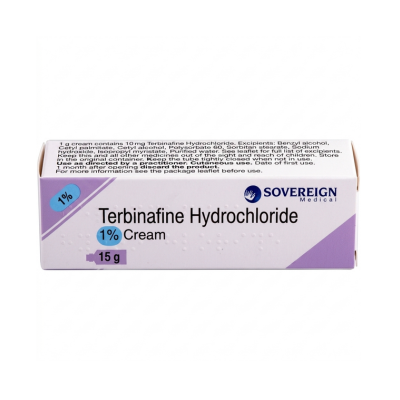
- Powerful Antifungal
- Non-Greasy Formula
- Versatile Treatment

Terbinafine 1% Cream
Category:Nail ProblemsTerbinafine Cream 1% is a pharmacy-strength antifungal treatment for common fungal skin infections including athlete's foot, jock itch, ringworm and skin candidiasis. Applied directly to the affected area, it works by targeting the source of infection at skin level.
Fetching Data...




Frequently Asked Questions for Terbinafine 1% Cream
What is Terbinafine Cream?
Terbinafine Cream 1% is a topical antifungal treatment used to treat fungal skin infections. It is applied directly to the affected area of skin and is available as a pharmacy medicine through My London Pharmacy's online consultation service.
It contains one active ingredient:
• Terbinafine Hydrochloride 1% w/w — an allylamine antifungal agent that works directly against the fungi responsible for common skin infections including athlete's foot, jock itch, ringworm, and skin candidiasis.
How does Terbinafine Cream work?
Terbinafine works by inhibiting squalene epoxidase, an enzyme that fungi need to produce ergosterol, a critical component of the fungal cell membrane. Without ergosterol, the cell membrane becomes unstable and permeable. The contents of the fungal cell spill out, and the cells die.
This mechanism is fungicidal, meaning it actively kills the fungi rather than simply stopping them from growing. It is specific to fungi and does not affect human cells in the same way, which is why it can be applied to skin safely when used as directed.
Unlike some antifungal treatments that are fungistatic (growth-inhibiting only), the fungicidal action of Terbinafine means that treatment courses are generally shorter, typically one to two weeks for most skin infections.
What conditions can it treat?
Terbinafine Cream is effective against fungal skin infections caused by dermatophytes and certain other fungi, including:
Athlete's foot (tinea pedis) - fungal infection affecting the toes and the skin between them, causing itching, scaling, and cracking
Jock itch (tinea cruris) - fungal infection of the groin and inner thigh, causing a red, itchy rash
Ringworm (tinea corporis) - a ring-shaped rash on the arms, legs, or body (not caused by a worm)
Skin candidiasis - infection caused by Candida yeast, commonly affecting warm, moist areas of skin
Pityriasis versicolor - a yeast-related skin condition causing discoloured patches on the skin
If you are unsure whether your skin condition is suitable for treatment with Terbinafine Cream, our prescribers will assess your symptoms as part of the online consultation.
Who is it suitable for?
Terbinafine Cream is suitable for adults and children over 12 years of age with a confirmed or suspected fungal skin infection.
It is not suitable if you:
Are allergic to Terbinafine hydrochloride or any other ingredient in the cream
Have nail infections affecting two or more nails, as oral Terbinafine tablets may be more appropriate
Have a fungal infection that has spread to multiple areas of the body, as tablets may be required
How to use Terbinafine Cream
Always use Terbinafine Cream as directed by your prescriber or as described in the patient information leaflet enclosed with your medicine.
1. Clean the affected area of skin thoroughly and pat dry.
2. Apply a small amount of cream to your fingertip, approximately the size of a pea.
3. Rub the cream gently but thoroughly into the affected skin and the area immediately surrounding it.
4. Wash your hands with soap and water immediately after applying the cream, unless the hands themselves are being treated.
5. Avoid contact with the eyes, mouth, or nose. If contact occurs, rinse thoroughly with water.
Do not apply Terbinafine Cream under occlusive dressings or bandages. If you are using another topical product on the same area, wait a few minutes between applications to allow absorption.
Side effects
Terbinafine Cream is generally well tolerated. Side effects are uncommon when used as directed.
Common side effects (may affect up to 1 in 10 people):
Itching at the site of application
Peeling or flaking skin
Uncommon side effects (may affect up to 1 in 100 people):
Skin colour changes
Scabbing or crusting
Burning sensation
Redness, irritation, or discomfort at the application site
Lesions
Allergic reaction: Stop use immediately and go to your nearest A&E if you experience severe itching with raised lumps, hives, or blisters, or difficulty breathing or swallowing, or swelling of the face, lips, tongue, or throat. Take your medication with you.
This is not an exhaustive list. Refer to the patient information leaflet for full details.
Warnings
- Do not use if you are allergic to Terbinafine or any listed ingredient
- Not for use in children under 12 years of age
- Not recommended for fungal nail infections affecting multiple nails, as tablets may be required
- Avoid contact with the eyes, mouth, and nose during application
- Do not use under bandages or occlusive dressings
- Do not share your medication with anyone else, even if they have the same symptoms
- Keep out of sight and reach of children and pets
- Do not use past the expiry date printed on the packaging
- Dispose of unused or expired medicine via your local pharmacy
Pregnancy and breastfeeding
If you are pregnant, think you may be pregnant, or are breastfeeding, speak to your doctor or pharmacist before using Terbinafine Cream. Disclose pregnancy or breastfeeding status during your online consultation so our prescribers can make an appropriate individual assessment. Treatment will only be recommended where the benefit to the mother is considered to outweigh any potential risk.
More FAQs
Q: What is Terbinafine Cream used for?
Terbinafine Cream 1% is a topical antifungal treatment used to treat fungal skin infections including athlete's foot, jock itch, ringworm, skin candidiasis, and pityriasis versicolor. It is applied directly to the affected area of skin.
Q: How does it work?
Terbinafine inhibits an enzyme that fungi need to produce ergosterol, a key structural component of the fungal cell membrane. Without it, the cell membrane breaks down and the fungal cells die. This makes it fungicidal, actively killing the fungi, rather than simply slowing their growth.
Q: How quickly does Terbinafine Cream work?
Improvement in symptoms, particularly itching and redness, is typically noticeable within a few days of starting treatment. Scaling may reduce over the following week or two. The full course must be completed even if symptoms improve early, to reduce the risk of the infection returning.
Q: Can I use Terbinafine Cream every day?
Yes. Terbinafine Cream is applied once daily to the affected area. The course length depends on your infection type, ranging from one to two weeks. It is not intended for long-term continuous use. Your prescriber will advise on the appropriate duration for your condition.
Q: Is Terbinafine Cream the same as Canesten or Lamisil?
They are different products. Canesten contains clotrimazole, a different class of antifungal. Lamisil is a brand of Terbinafine cream. My London Pharmacys supplies the generic equivalent containing the same active ingredient at the same strength (Terbinafine 1%). Your prescriber can advise which product is most suitable for your specific infection.
Q: Can children use Terbinafine Cream?
Terbinafine Cream is generally not recommended for children under 12 years of age. For children aged 12 and over, it may be suitable but should always be used under medical supervision. Disclose the patient's age during your consultation so our prescribers can make an appropriate assessment.
Q: What should I do if I get the cream in my eyes?
Rinse immediately and thoroughly with water. Avoid contact with eyes during application. If you experience persistent eye irritation, seek medical advice.
Q: Can I use Terbinafine Cream if I am pregnant or breastfeeding?
Disclose pregnancy or breastfeeding status during your consultation. Our prescribers will make an individual assessment and will only recommend treatment where the benefit is considered appropriate. If you have concerns, speak with your GP before proceeding.
Q: Will it interact with other medicines I take?
Topical Terbinafine has minimal systemic absorption when used as directed, making significant drug interactions uncommon. However, disclose all current medicines, topical and oral, during your consultation to allow your prescriber to make a fully informed assessment.
Q: What happens if my fungal infection comes back after treatment?
Fungal infections can recur, particularly if the source of reinfection is not addressed, such as shared footwear or communal changing areas. If your condition returns, a repeat consultation will allow your prescriber to advise on appropriate management, which may include repeat treatment, preventative measures, or referral to a GP or dermatologist.